Radiation Sensing & Shielding since 1975

Neutron Shielding

5% Borated Polyethylene

JCPE5

JCPE5 is a 5% boron loaded polyethylene neutron shield – HMW grade. Specifically developed for neutron shielding purposes in nuclear installations; its optimal boron content of 5% provides excellent attenuation of thermal neutrons, thus reducing the levels of capture-gamma radiation.

  • High hydrogen content
  • Excellent attenuation of thermal neutrons
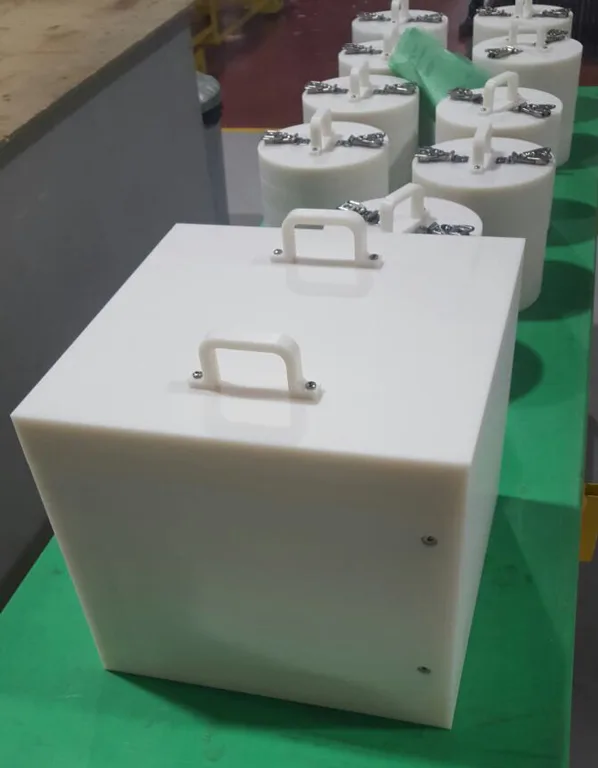
  • Can be supplied as shielding kits
  • Other boron loadings available

JCPE5 has a high hydrogen content, making it an effective fast neutron shield, slowing down fast neutrons to low energy thermal (slow) neutrons, which are then absorbed by the added boron compound.

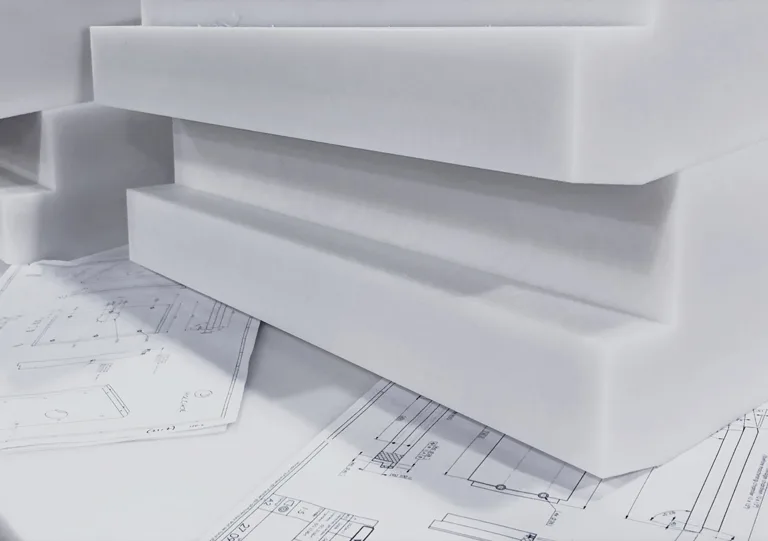
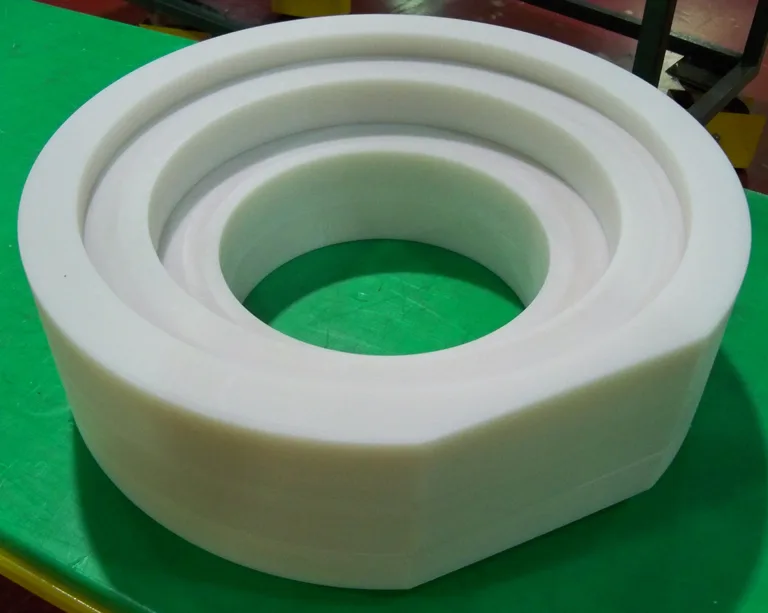
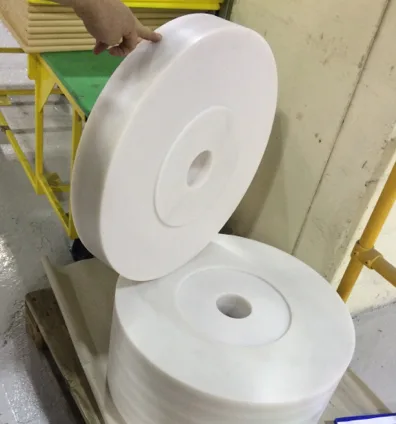
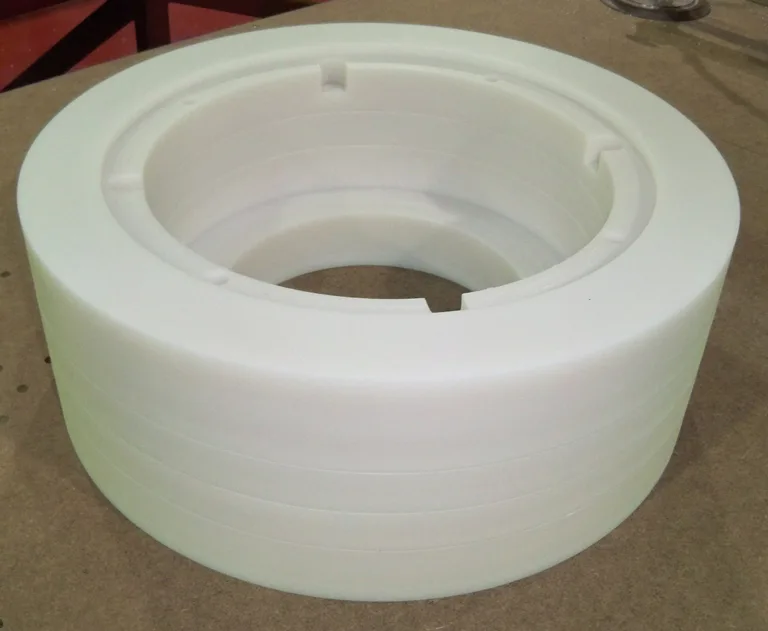
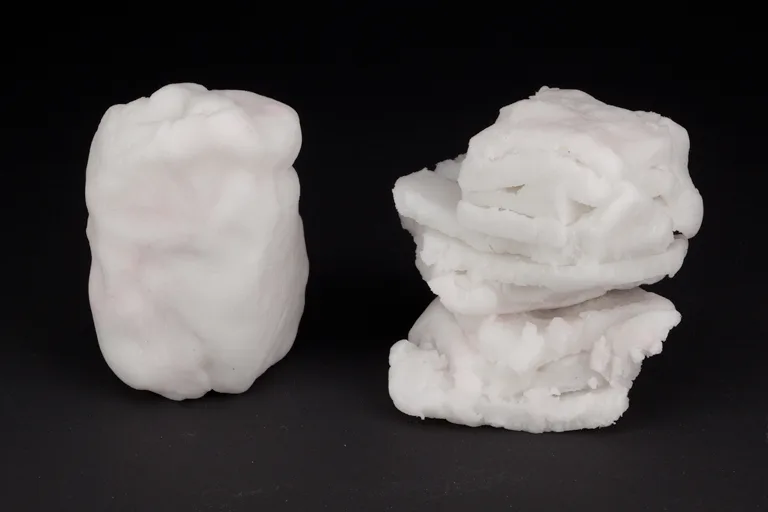
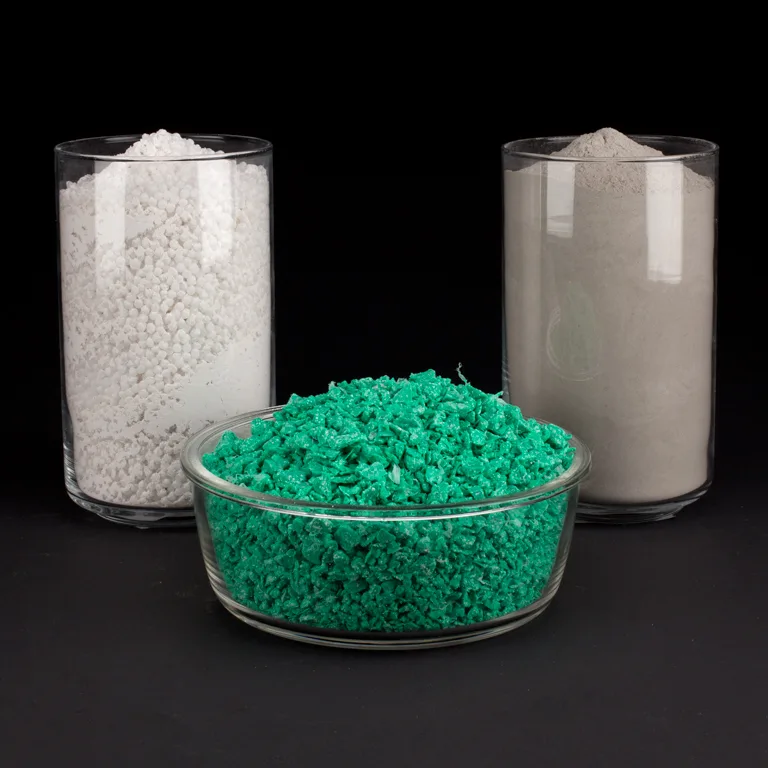
JCPE5 5% Borated Polyethylene is typically used in neutron shielding applications where low and intermediate-levels of neutron flux are expected, but elevated temperatures are not. JCPE5 is available in a wide range of form factors including sheets, bricks, cylinders, pellets, and other custom shapes.

It is easily machined using common wood and metalworking tools. JCS Nuclear can not only provide custom machining but can also pour JCPE5 into custom made moulds to provide application-specific shielding forms.

Features

  • available as slabs, bricks, pellets, rods and spheres
  • Other dimensions/shapes on request
  • Can be supplied machined to close tolerances
  • Other boron loadings available on request
  • Self-extinguishing version available (see model JC207)

Uses

Neutron Shielding
Linac Bunkers
Moderator
Instrument Shielding
Wall Shielding

From the JCS shielding database

Data sheet

1.035Density g/cm³
5%Boron content
80Max temperature °C
Operating range-20 to 80 °C (120 °C briefly)
-60°C-40°C0°C40°C80°C120°CUse briefly

Physical Properties

Average molar mass (average molecular weight) – (1)10⁶ g/mol (0.5)
Density (ISO 1183-1)1.035 g/cm³

Thermal Properties

Melting temperature (DSC, 10°C/min - ISO 11357-1/-3)135°C
Thermal conductivity at 23°C≥0.8 W/(K.m)
Average coefficient of linear thermal expansion between 23 and 100°C135 x 10⁻⁶ m/(m.K)
Temperature of deflection under load:- method A: 1.8 Mpa (ISO 75-1/-2)45°C
Vicat softening temperature – VST/B50 (ISO 306)84°C
Max. allowable service temperature in air: – for short periods (3)120°C
continuously : for 20,000 h (4)80°C
Min. service temperature (6)--20°C
“Oxygen Index” (ISO 4589-1/-2)<20%

Mechanical Properties

tensile stress at yield (ISO 527-1/-2) (9)21 MPa
tensile strain at yield (ISO 527-1/-2) (9)6.50%
tensile strain at break (ISO 527-1/-2) (9)7%
tensile modulus of elasticity (ISO 527-1/-2) (10)1600MPa
compressive stress at 1 / 2 / 5% nominal strain (ISO 604) (10)14 / 21 / 29 MPa
Charpy impact strength – unnotched (ISO 179-1/1eU) (12)15 kJ/m²
Charpy impact strength – notched (ISO 179-1/1eA)5C kJ/m²
Charpy impact strength – notched (double 14° notch - ISO 11542-2) – (15)8 kJ/m²
Ball indentation hardness (ISO 2039-1) (16)36N/mm²
Shore hardness D (15 s - ISO 2039-2) – (16)66
Relative weight loss during a wear test in “sand/water-slurry” ;TIVAR 1000 = 100 (ISO 15527)350

Electrical Properties

Electric strength (IEC 60243-1) (15)kV/mm
Volume resistivity (IEC 60093)>10¹⁴Ohm cm
Surface resistivity (IEC 60093)>10¹⁴ Ohm

Specifications

Specifications
Standard Units Value
Properties
Colour - - White
Density ISO 1183-1 g/cm³ 1.035
Thermal Properties
Melting temperature (DSC, 10°C (50°F) / min) ISO 11357-1/-3 °C 135
Glass transition temperature (DSC, 20°C (68°F) / min) ISO 11357-1/-2 °C -
Thermal conductivity at 23°C (73°F) - W/(K.m) ≥ 0.38
Coefficient of linear thermal expansion (-40 to 150 °C) (-40 to 300°F) ASTM E-831 (TMA) µin./in./°F
Coefficient of linear thermal expansion (23 to 100°C) (73°F to 210°F) - µm/(m.K) 135
Heat Deflection Temperature: method A: 1.8 MPa (264 PSI) ISO 75-1/-2 °C 45
Continuous allowable service temperature in air (20.000 hrs) - °C 80
Min. service temperature - °C -20
Flammability: UL 94 (3 mm (1/8 in.)) - - HB
Flammability: Oxygen Index ISO 4589-1/-2 % <20
Tensile strength ISO 527-1/-2 MPa 21
Tensile strain (elongation) at yield ISO 527-1/-2 % 7
Tensile strain (elongation) at break ISO 527-1/-2 % 7
Mechanical Properties
Tensile modulus of elasticity ISO 527-1/-2 MPa 1600
Shear Strength ASTM D732 MPa
Compressive stress at 1 / 2 / 5 % nominal strain ISO 604 MPa 14/ 21 / 29
Compressive strength ASTM D695 PSI -
Charpy impact strength - unnotched ISO 179-1/1eU kJ/m² 15,0
Charpy impact strength - notched ISO 179-1/1eA kJ/m² 5C
Charpy impact strength - double 14° notched ISO 11542-2 kJ/m² 8
Izod Impact notched ASTM D256 ft.lb./in
Flexural strength ISO 178 MPa -
Flexural modulus of elasticity ISO 178 MPa -
Relative volume loss during wear test "sand-slurry" : TIVAR® 1000=100 ISO 15527 - 350
Shore hardness D ISO 868 - 66
Electrical Properties
Electric strength IEC 60243-1 kV/mm -
Volume resistivity IEC 62631-3-1 Ohm.cm 10E13
Surface resistivity ANSI/ESD STM 11.11 Ohm/sq. 10E12
Dielectric constant at 1 MHz IEC 62631-2-1 - -
Dissipation factor at 1 MHz IEC 62631-2-1 - -
Miscellaneous
Specific Gravity ASTM D792 - -
Water absorption after 24h immersion in water of 23°C (73°F) ISO 62 % < 0.1
Water absorption at saturation in water of 23 °C (73°F) ASTM D570 % -
Wear rate ISO 7148-2 µm/km -
Dynamic Coefficient of Friction (-) ISO 7148-2 -
Limiting PV at 100 FPM QTM 55007 ft.lbs/in².min -
Limiting PV at 0.1 / 1 m/s cylindrical sleeve bearings - Mpa.m/s - / -
NYP: there is no yield point
Note: 1 g/cm³ = 1,000 kg/m³ ; 1 MPa = 1 N/mm² ; 1 kV/mm = 1 MV/m

Talk to our team

Quotes, technical questions or a bespoke requirement — we’ll get back to you quickly.