FLINT
A fully integrated gamma-ray spectrometer
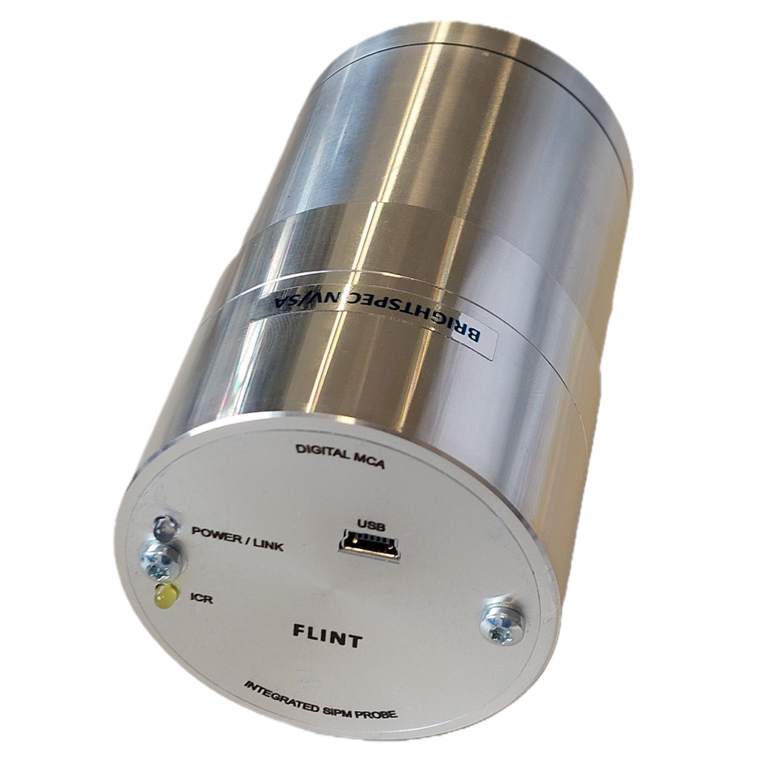
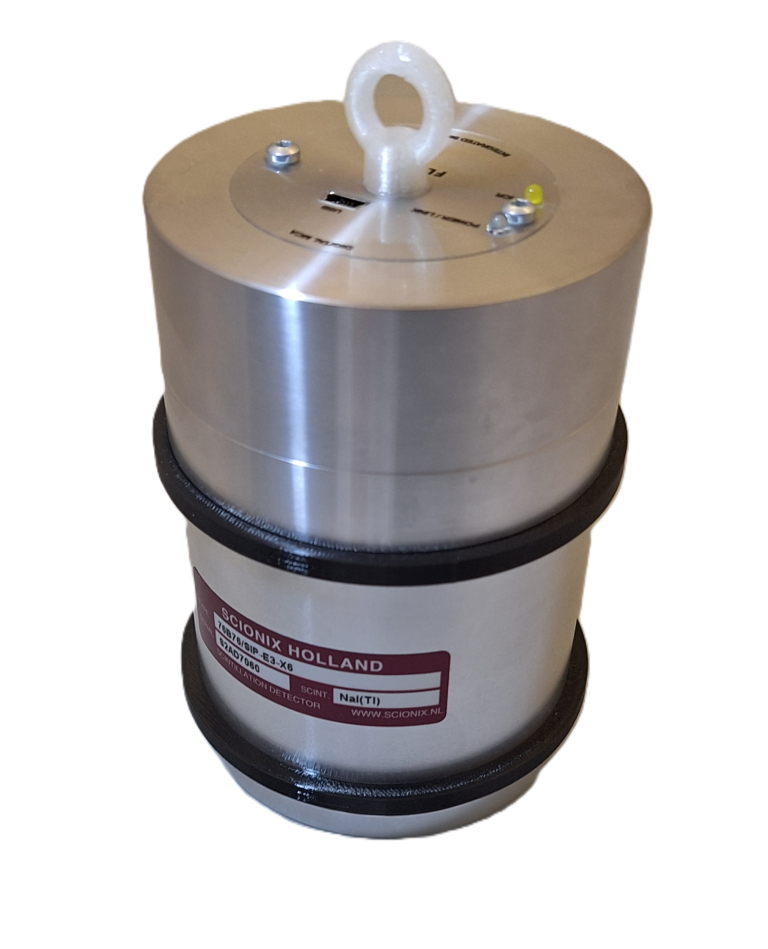
FLINT delivers laboratory-grade gamma spectrometry in a remarkably compact and self-contained instrument. By integrating the detector, SiPM photomultiplier array, temperature-stabilised power supply and advanced digital MCA into one unit, FLINT removes the traditional complexity associated with spectrometer setup and transport.
With power and data provided via a single USB cable, FLINT can be deployed in minutes; whether on the laboratory bench, in a temporary experimental setup or during field surveys where space, time and environmental conditions are less predictable. Its thermally isolated construction and temperature-compensated electronics ensure stable spectral performance even as ambient conditions change.
FLINT is equally suited to teaching laboratories, routine monitoring and mobile measurement campaigns, giving users immediate access to high-quality spectral data without the logistical burden of multiple interconnected instruments. When supplied in PRO configurations with BrightSpec’s bGamma software, FLINT becomes a complete solution for gamma-ray spectrum analysis and radioisotope quantification.
Features at a glance
- Compact and complete gamma‑ray spectrometer
- Integrated scintillator detector (multiple sizes/materials) with SiPM arrays
- Internally generated, temperature‑stabilised bias power supply
- Full‑featured digital MCA
- Up to 4096 channels with 32‑bit depth
- Pulse‑Height Analysis (PHA) acquisition mode
- Multi‑Channel Scaling (MCS) acquisition mode
- Fully configurable digital trapezoidal shaper
- Compact aluminium enclosure
- USB connection for power, data and control
- Basic acquisition and control software included
- Optional bGamma full‑featured analysis software
Uses
- Environmental radiation monitoring and baseline surveys
- On‑site and field‑based gamma spectrometry
- Support measurements for nuclear site operations and radiological protection
- Teaching and training laboratories
- Research experiments and temporary laboratory setups
- OEM, systems integration and instrumentation development





Standard Software
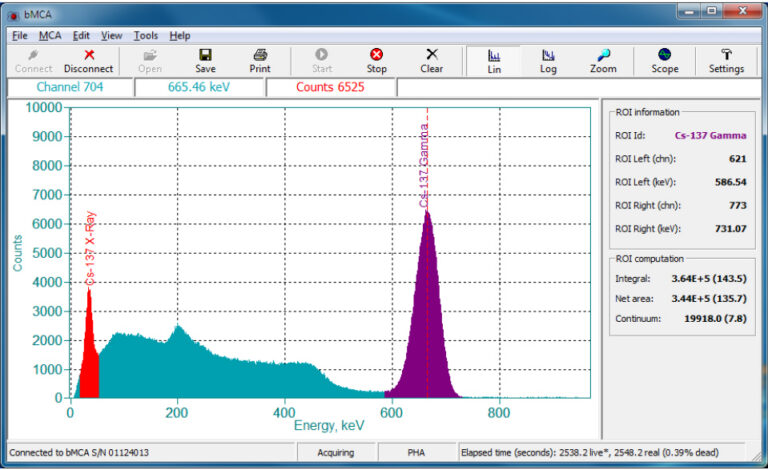
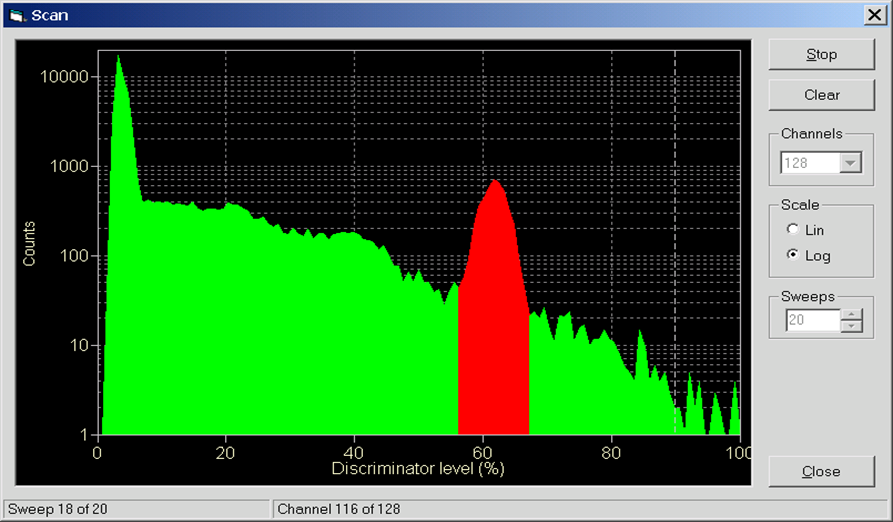
Our standard acquisition and spectrometry software is bundled with and can be used to connect to any of our Multi-Channel Analysers for managing operations such as setup, control, data acquisition and visualisation.
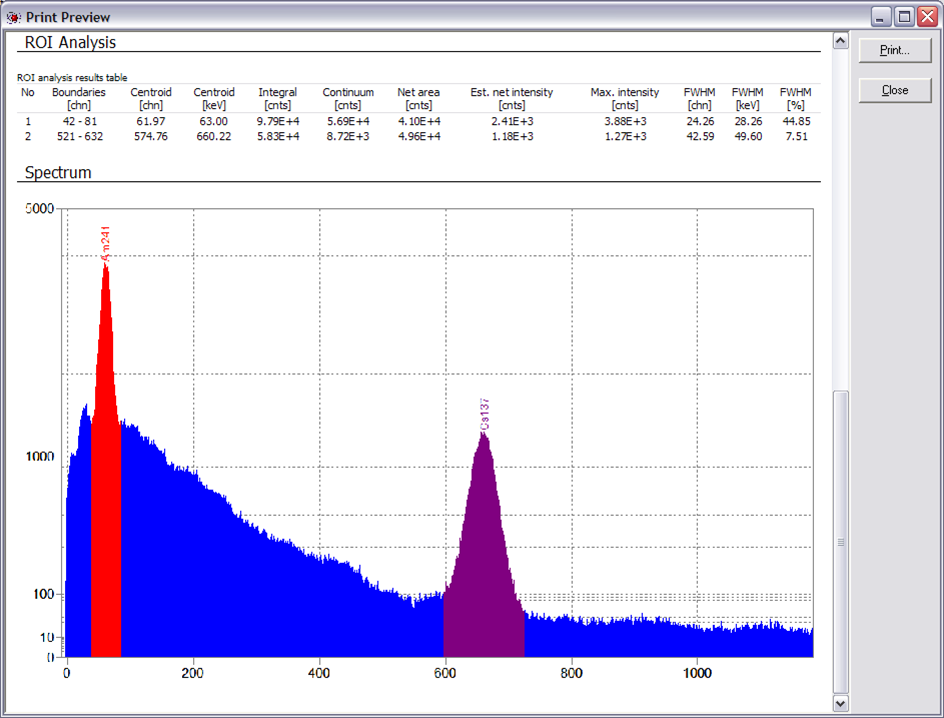
A digital oscilloscope function allows the user to monitor the input and filtered pulses to aid in fine-tuning the MCA parameters. The program also includes a few spectrometry-related functions for processing the spectral data such as calibration, ROI analysis and peak search.
Main features:
- Control of the operation of the MCA device
- Setup of acquisition parameters
- Data acquisition in Pulse Height Analysis (PHA) and Multi-Channel Scaling (MCS) modes
- Visualisation of the energy spectrum
- Peak search and energy calibration
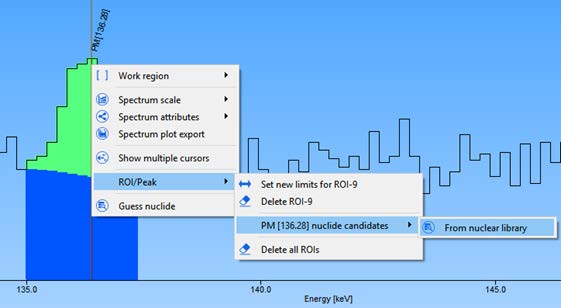
- ROI-based spectrum analysis
- Saving of acquired spectra into files in ASCII format
- Generation of reports
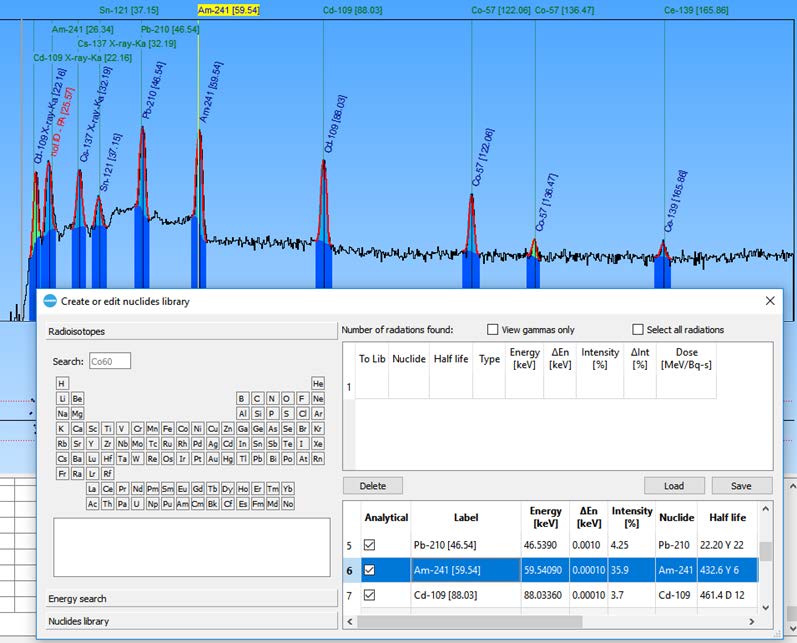
- Creation and use of nuclide libraries
- Possibility of calling an external application for further spectrum processing at the click of a button
Extended Software
bGamma
Modern Gamma Spectroscopy Software
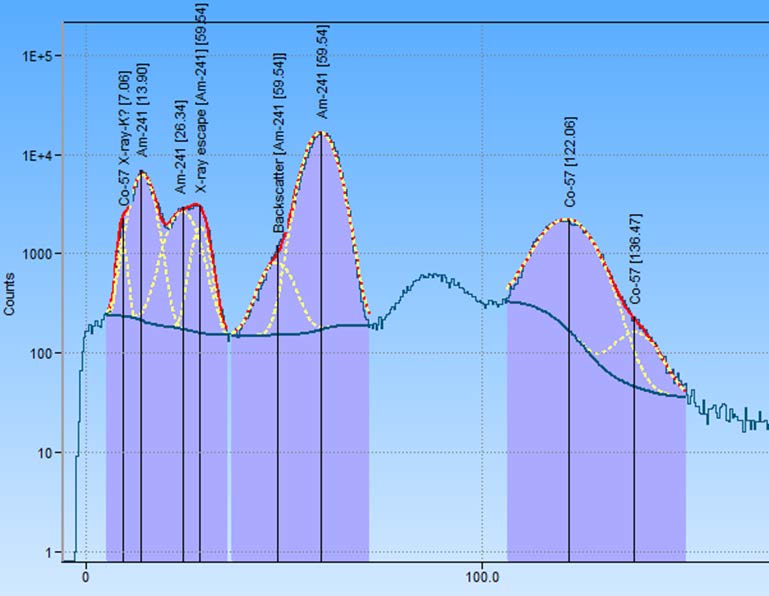
The new bGamma spectroscopy Software is an all-inclusive, modern software package for gamma-ray spectrum analysis, radionuclide identification and quantification. The software can analyse any recorded gamma-ray spectrum independently of the detector type, geometry or sample.
bGamma provides all the necessary tools and functionality for performing a detailed analysis of complex gamma-ray spectra and the corresponding radionuclide identification for the given sample.
“The new bGamma software is a comprehensive software package designed from the outset to bring gamma spectrum analysis up to modern requirements…”
Features Include:
- Multi-document application
- Controls data acquisition via detector-MCA setups
- Implements several automatic peak search methods
- Provides different methods for peaks’ continuum correction
- Region of interest (ROI) calculations and automatic and/or manual marking
- Energy and shape calibrations using comprehensive data input with visual interaction
- Easy to perform and yet powerful efficiency calibration
- Includes several powerful spectrum analysis fitting methods, including Bayesian fitting. This wide choice of analysis methods warranties the success and/or suitability of spectrum analysis for any kind of gamma-ray spectrum and analysis needs
- Fitting and mathematical model parameters are at hand for their quick changes and optimisation
- Advanced and modern GUI for superb spectrum and analysis results visualization