Bubble Detectors
Real‑Time Neutron Dosimetry Made Visible
Instant, accurate neutron dose measurement – without power, electronics, or complexity.
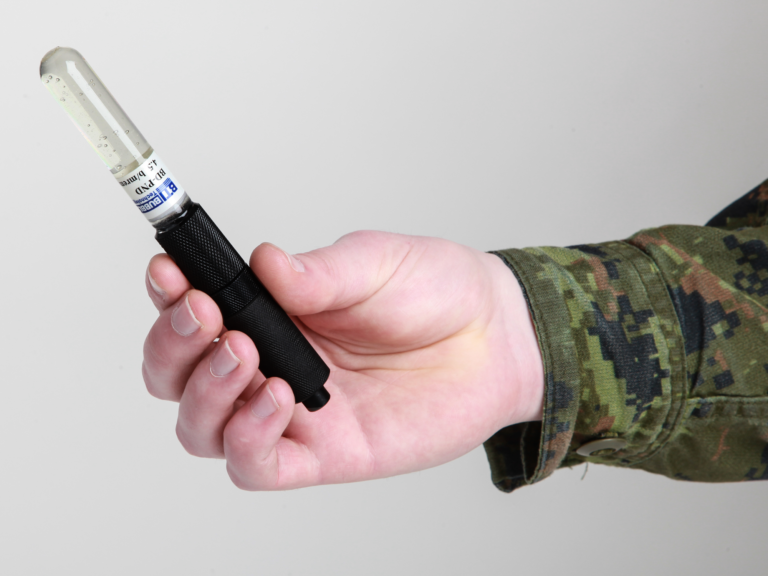
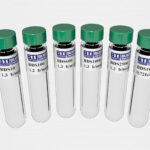
Bubble Detectors are compact, tissue‑equivalent neutron dosimeters that provide immediate visual confirmation of neutron exposure. Used worldwide in nuclear, medical, research, and defence environments, Bubble Detectors offer unmatched sensitivity, energy independence, and zero gamma response.
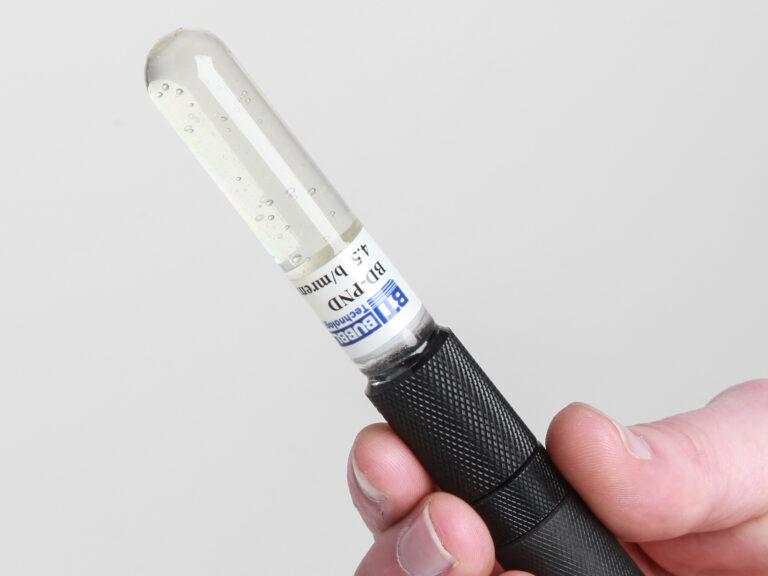
At the heart of each detector is a patented technology: microscopic droplets of superheated liquid suspended in a clear polymer. When struck by a neutron, a droplet vaporises instantly, forming a visible bubble. The number of bubbles is directly proportional to neutron dose, enabling fast, reliable assessment — at a glance.
No electronics. No power. No delay.
Introducing Bubble Detectors®
Bubble Detectors use a patented superheated droplet technology to provide direct, tissue‑equivalent neutron dose measurement. Microscopic droplets of a specially formulated liquid are uniformly dispersed throughout a transparent polymer matrix. Each droplet is engineered to vaporise only when struck by a neutron above a defined energy threshold.
When a neutron interaction occurs, the droplet instantly transitions to a gas phase, forming a permanent, visible bubble trapped within the detector. The number of bubbles correlates directly to absorbed neutron dose, allowing measurements that are energy‑independent above threshold and dose‑rate independent.
Unlike electronic neutron instruments, Bubble Detectors contain no electronics, power supply, or software, eliminating electromagnetic susceptibility, photon interference, and calibration drift. Their response is inherently isotropic, ensuring accurate dose measurement regardless of neutron direction.
Crucially, Bubble Detectors exhibit zero sensitivity to gamma radiation and electrons, making them uniquely effective in mixed radiation fields where conventional neutron monitors struggle or fail entirely.
Temperature compensation is integrated into selected models, maintaining consistent sensitivity over typical operating ranges. After exposure, detectors can be re-compressed and reused multiple times, offering both operational flexibility and low lifetime cost.
This simple but robust physical response makes Bubble Detectors a trusted reference tool wherever reliable neutron dosimetry is required.
Bubble Detector Models
| Model | BD‑PND | BDT | BDS |
|---|---|---|---|
| Model info | Recommended for personal neutron dosimetry, with sensitivity exceeding ICRP‑60 requirements and automatic temperature compensation over the normal operating range. |
Preferentially sensitive to thermal neutrons, ideal where discrimination
between thermal and fast neutrons is required. Thermal:fast neutron sensitivity > 10:1 |
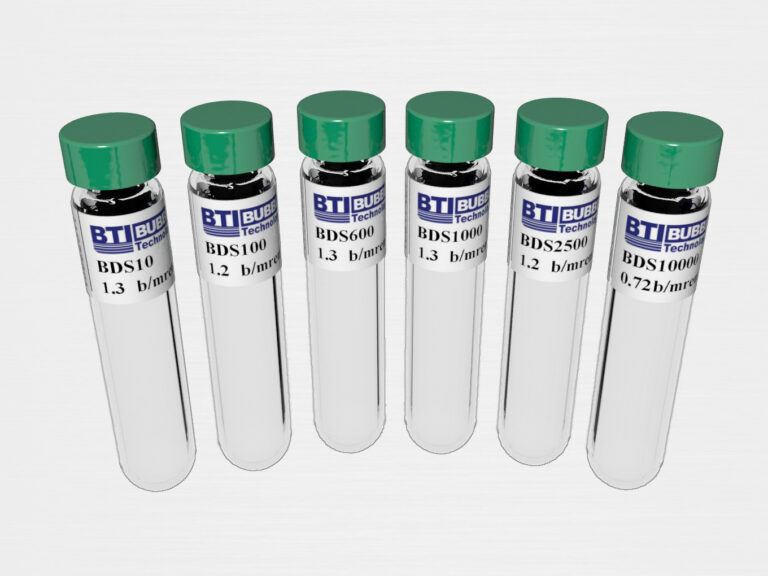
A multi‑threshold neutron spectrometer system, allowing characterisation of neutron energy spectra using a simple unfolding method. |
| Energy range | < 200 keV to > 15 MeV | Thermal (~1/V for epithermals) | Six thresholds (keV): 10, 100, 600, 1000, 2500, 10000 |
| Sensitivity |
1–2 bub/mrem (0.1–0.2 bub/µSv) 10–19 bub/mrem (0.9–1.8 bub/µSv) 20–40 bub/mrem (1.9–3.7 bub/µSv) |
20–40 bubbles/mrem (1.8–3.6 bub/µSv) | 1–2 bubbles/mrem (0.1–0.2 bub/µSv) |
| Temperature compensation | Yes | Yes | No |
| Optimum temperature | 20–37 °C | 20–37 °C | 20 °C (±0.5 °C) |
| Size | 160 mm × 19 mm | 160 mm × 19 mm | 115 mm × 16 mm |
| Weight | 58 g | 58 g | 20 g |
| Reuse | Yes | Yes | > 10 cycles |
| Re‑compression method | Integrated | Integrated | External chamber required |
Features at a glance
- Real‑time neutron dose indication
- Zero sensitivity to photons or electrons
- No power, software, or calibration drift
- Lightweight, rugged, and reusable
- Maintenance‑free & environmentally friendly
- Ideal for ALARA programs & rapid surveys
Uses
- Nuclear facilities & laboratories – Neutron dosimetry, shielding verification, and controlled area monitoring
- Industrial & research accelerators – Neutron field assessment around high‑energy accelerators & beamlines
- Fusion research – Experimental operation, component testing, diagnostics development & shielding validation
- Aviation, aerospace, and space applications – High‑altitude neutron exposure monitoring
- Defence and security applications – Complex field Personal neutron dosimetry & radiation hazard detection